
SEO For An E-Learning Platform
How We Grew an Education Platform to 57,000 Monthly Organic Visitors & $87K Monthly Revenue
Building a stronger organic growth channel through relevant keywords, search intent, useful content, topical authority, technical SEO, and a connected search strategy.
Turning Irrelevant Traffic Into Meaningful Growth
Transforming an underperforming e-learning platform into a scalable customer acquisition engine through strategic SEO, technical optimization, and topical authority.
We worked with this B2C online learning platform to improve its organic search performance and grow revenue through SEO. Although the website was already getting some organic traffic, much of it came from irrelevant search queries and wasn’t generating enough revenue. The website also had a high spam score, raising concerns about its authority, reputation, and backlink profile.
Our goal was to attract more relevant visitors, improve keyword rankings, increase revenue through organic search, and reduce the website’s spam score.
With the US as the primary target market, alongside the UK and Canada, we developed an SEO strategy focused on keyword targeting and relevance, content quality and optimization, technical SEO improvements, site structure, and backlink quality.
Over 12 months, these efforts helped the website grow its organic traffic and search visibility, attract more relevant customers, and increase revenue.
The Results After 12 Months:
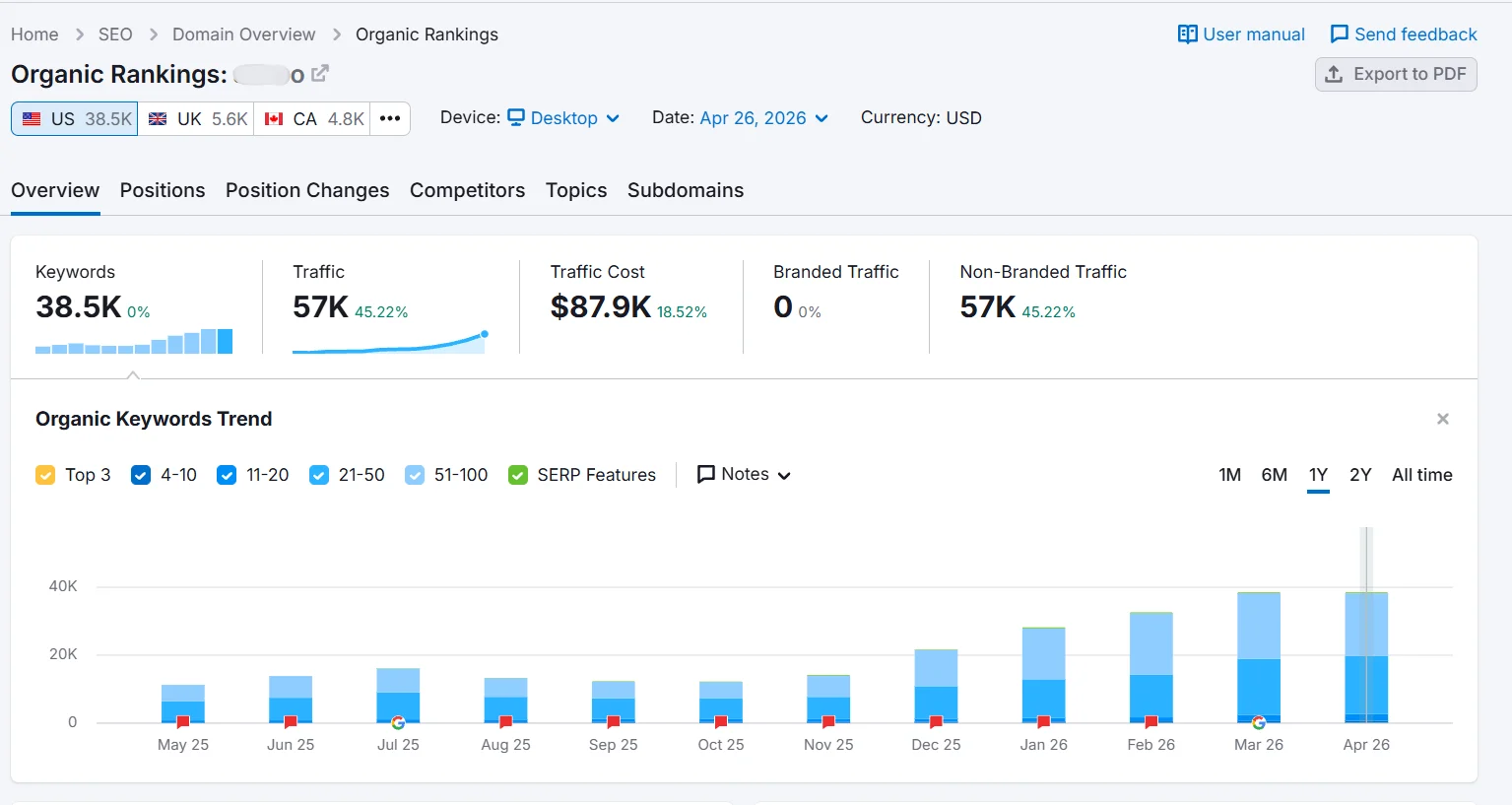
57,000
Monthly Organic Visitors
38,500
Ranking Keywords
45%
Year-over-Year Organic Traffic Growth
$87,900
Estimated Monthly Organic Traffic Value
34%
Increase In Estimated Traffic Value
~100%
Non-branded Organic Traffic
The outcome was more than an increase in traffic. The platform strengthened its visibility across relevant search queries and built a more sustainable way to attract people actively looking for online courses.
More Traffic Wasn't Enough
The website was already attracting organic visitors, but its existing search visibility wasn’t translating into its full growth potential.
Our initial audit identified several issues limiting its ability to compete for relevant searches and build long-term organic momentum.
1
Irrelevant Search Traffic
Some of the search queries bringing visitors to the website weren’t closely related to the courses available on the platform.
We needed to understand which searches mattered to the business and make sure the right pages targeted them.
2
Weak Content & Topical Authority
The website needed better coverage of relevant subjects. Related pages also needed to work together more effectively instead of leaving gaps in the content or treating each page as a separate effort.
3
Poor Internal Linking and Site Structure
Internal linking and content organization needed improvement so users and search engines could discover important pages more easily.
Improving the way content was organized and linked would help visitors find relevant information and help search engines discover important pages.
4
Technical SEO and Indexation Issues
We needed to review crawlability, indexation, website speed, and other technical factors that could affect how search engines accessed and understood the website.
5
Backlink Quality Concerns
The website had a high spam score, and its backlink profile included a lot of low-quality links that needed investigation.
We needed to assess the referring domains, identify potential risks, and determine where cleanup or better link-building practices were appropriate.
6
The Need for a Clear SEO Plan
These problems were connected and isolated SEO fixes wouldn’t address these problems together. Publishing more content wouldn’t fix technical issues, and building more backlinks wouldn’t make irrelevant traffic valuable.
The website needed a plan that addressed the different issues together and allowed us to measure progress over time.
The central question was not simply how to get more traffic. It was how to attract more of the right traffic while building a stronger foundation for future growth.
Focus on Relevance First
We didn’t want to increase traffic just for the sake of it. We wanted to improve the website’s visibility for searches that matched its courses and the needs of its audience.
That meant looking at the whole website: which keywords it targeted, how useful its content was, how its pages were connected, whether technical issues were holding it back, and what its backlink profile looked like.
Here’s how we put that approach into practice.
What We Worked On. Six Workstreams, One Connected System.
1. Keyword Research and Search Intent Mapping
We began by examining keyword opportunities through the lens of user intent and business relevance. Instead of targeting keywords simply because they had high search volume, we evaluated how closely they aligned with the platform’s offerings and which pages could best satisfy the searcher’s needs.
Our work included:
Identifying relevant keyword opportunities across course, category, and informational searches.
Mapping search intent to the most appropriate landing pages.
Prioritizing searches with commercial relevance, while also considering informational topics that could support the wider content strategy.
The aim was to help the website attract visitors who were looking for what the platform actually offered, rather than chasing search volume alone.
2. Content Strategy & Topical Authority
Keyword research identified the opportunities. The next step was building the content structure needed to compete for them. This involved improving existing pages, filling gaps where necessary, and making sure the content better matched what people were searching for.
We worked on:
Rather than publishing articles simply to increase the amount of content on the website, we focused on making the existing content more useful and building stronger coverage of relevant topics.
3. Site Structure and Internal Linking
Even strong content can underperform when important pages are difficult to discover or poorly connected to the rest of the website. We reviewed the site’s navigation, page hierarchy, and internal linking to identify opportunities to improve how users and search engines moved through the content.
We worked on:
This helped create a more logical structure, with related content supporting the pages that mattered most to the business.
4. Technical SEO and Website Performance
We addressed technical issues that could prevent valuable pages from being discovered, crawled, indexed, or experienced effectively.
Our work included:
The focus was on resolving issues that could prevent important pages from being discovered, indexed, or used effectively.
5. Backlink Analysis & Link Building
The website’s backlink profile was another area that needed attention. Because of the high spam score and concerns about link quality, we reviewed the existing backlink profile and evaluated opportunities to improve authority and relevance.
We worked on:
The priority wasn’t to build as many links as possible. It was to assess the existing profile carefully and focus on relevant, credible opportunities to strengthen it.
6. Ongoing Monitoring and Improvements
SEO isn’t a one-time job. As the work progressed, we monitored performance to understand what was improving and where further attention was needed.
We looked at organic traffic, keyword rankings, landing-page performance, and estimated organic traffic value. These insights helped us evaluate progress and decide which opportunities to focus on next.
This continuous process kept the strategy focused on meaningful growth opportunities rather than short-term ranking fluctuations.
5.6× Organic Traffic Growth in 12 Months
The goal wasn’t simply to increase website traffic. It was to improve the platform’s visibility for relevant searches and build a stronger organic acquisition channel.
Over 12 months, our SEO strategy helped the online learning platform expand its organic search presence significantly.
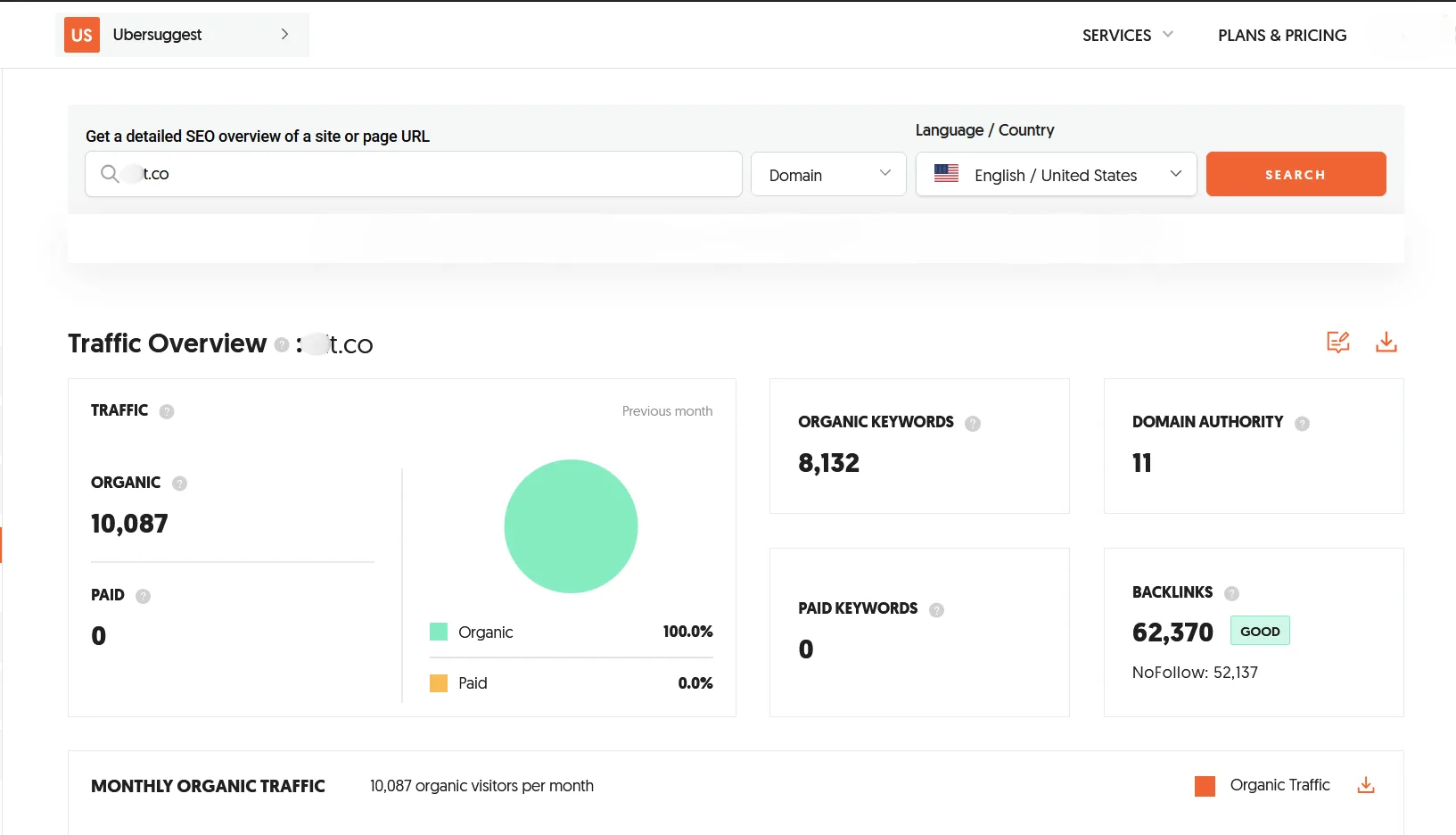
Before
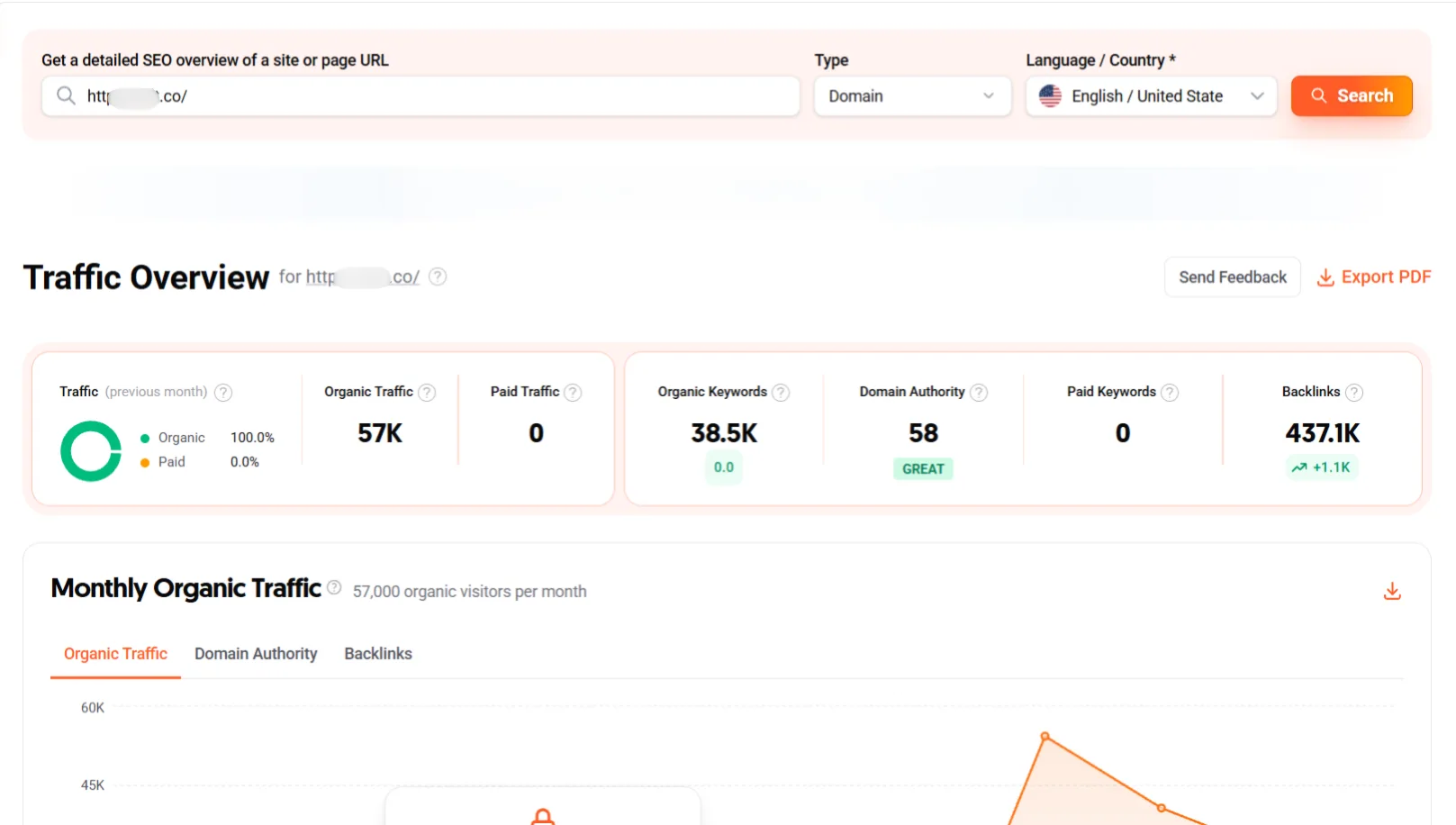
After
| SEO Metric | Before | After | Change |
|---|---|---|---|
| Monthly organic traffic | 10K | 57K | ↑ 470% |
| Organic keywords | 8.1K | 38.5K | ↑ 375.31% |
| Domain Authority | 11 | 58 | ↑ 427.27% |
| Total backlinks | 62.3K | 437.1K | ↑ 601.61% |
● The Takeaway
Growth takes more than articles, keywords, or links.
Growing organic traffic is not simply about publishing more articles, adding keywords to pages, or building more backlinks.
It requires understanding what your audience searches for, creating pages that satisfy those needs, organizing your website so important content can be discovered, resolving technical barriers, and building authority in a relevant way.
For this education platform, that coordinated approach helped expand organic visibility to 57,000 monthly visitors and 38,500 ranking keywords over approximately 12 months.
Want To Build A Stronger Organic Growth Channel?
If your website is attracting the wrong traffic, struggling to rank for valuable searches, or failing to turn its content into a reliable acquisition channel, let’s look at what’s holding it back.
We’ll help you identify the opportunities, prioritize the work that matters, and build an SEO strategy around your business goals.
No complicated pitch. No unnecessary services. Just a conversation about your business.